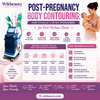
Post-Pregnancy Body Contouring: How to Build a Clinic Programme for Post-Partum Clients
, by Kashif Amin, 12 min reading time
Get 5% discount on your first purchase
, by Kashif Amin, 12 min reading time
Post-partum clients represent one of the most motivated and underserved segments of the body contouring market. This guide covers how to design a safe, effective, and commercially compelling post-pregnancy body contouring programme — from treatment timelines to package design and marketing.
Post-partum clients are one of the most motivated and commercially valuable segments of the body contouring market. Women who have recently given birth often experience significant changes to their body composition — including abdominal fat accumulation, skin laxity, diastasis recti, and changes to the breast and hip area — that are resistant to diet and exercise alone. These clients are highly motivated to address these changes, have a clear and specific treatment goal, and are willing to invest in professional treatments that deliver visible results.
Despite this opportunity, many body contouring clinics do not have a structured post-pregnancy programme. They treat post-partum clients on an ad hoc basis, without a clear treatment pathway, safety protocol, or marketing strategy designed specifically for this demographic. This guide covers everything a clinic owner needs to build a safe, effective, and commercially compelling post-pregnancy body contouring programme — from understanding the post-partum body to designing treatment combinations, package structures, and marketing campaigns that resonate with new mothers.
The post-partum body undergoes significant physiological changes during and after pregnancy that create specific body contouring challenges. Abdominal fat accumulation during pregnancy is hormonally driven and often resistant to diet and exercise, particularly in the lower abdominal area. Skin laxity in the abdominal area results from the stretching of the skin and underlying connective tissue during pregnancy, and the degree of laxity varies significantly between clients based on genetics, age, and the number of pregnancies. Diastasis recti — the separation of the abdominal muscles along the midline — affects a significant proportion of post-partum women and requires specific treatment considerations.
Understanding these physiological changes is essential for designing safe and effective post-partum treatment protocols. Not all body contouring technologies are appropriate for post-partum clients at all stages of recovery, and the treatment pathway must be designed to address the specific combination of fat accumulation, skin laxity, and muscle changes that each client presents with.
Aesthetic medicine specialists who work with post-partum clients consistently identify the combination of cryolipolysis for fat reduction, EMSlim with RF for abdominal muscle restoration and skin tightening, and pressotherapy for lymphatic drainage and oedema reduction as the most effective multi-technology protocol for post-pregnancy body contouring. This combination addresses all three of the primary post-partum body concerns — fat, skin laxity, and muscle separation — in a structured, progressive treatment pathway that delivers visible results at each stage and builds client commitment to completing the full programme.
Safety is the most important consideration when treating post-partum clients. The post-partum body is in a state of physiological recovery, and the timing of body contouring treatments must respect this recovery process. As a general guideline, non-invasive body contouring treatments should not begin until at least 8 to 12 weeks after a vaginal delivery and 12 to 16 weeks after a caesarean section, subject to medical clearance from the client’s obstetrician or GP.
Breastfeeding is a contraindication for some body contouring technologies. Cryolipolysis and pressotherapy are generally considered safe for breastfeeding clients, as they do not involve systemic energy delivery or hormonal effects. EMSlim and RF-based treatments should be used with caution in breastfeeding clients, and medical clearance should be obtained before treating the abdominal area. Always conduct a full medical history and contraindication screening at the initial consultation and obtain written medical clearance before beginning any post-partum treatment programme.
The most effective post-partum body contouring programmes combine three complementary technologies that address the distinct physiological changes of the post-partum body.
Cryolipolysis is the primary fat reduction technology for post-partum clients. It delivers permanent fat cell destruction in the abdominal area, flanks, and thighs — the areas most commonly affected by post-pregnancy fat accumulation — without surgery or downtime. The 360 Cryolipolysis Machine is the recommended configuration for post-partum abdominal treatment, as its wrap-around applicator technology delivers uniform fat reduction across the full circumference of the abdominal fat deposit, producing a more dramatic and more photographically compelling result than flat cup applicators.
EMSlim with RF is the primary muscle restoration and skin tightening technology for post-partum clients. The HIEMT component stimulates supramaximal muscle contractions that strengthen and restore the abdominal muscles, addressing both general abdominal weakness and mild diastasis recti. The RF component simultaneously tightens the overlying skin, addressing the skin laxity that is one of the most common post-partum concerns. The EMSlim HIEMT Body Sculpting Machine with RF is the recommended platform for post-partum abdominal restoration, delivering the combined muscle toning and skin tightening outcome that post-partum clients need in a single treatment session.
Pressotherapy is the recommended lymphatic drainage and oedema management technology for post-partum clients. Many post-partum women experience residual oedema and fluid retention in the legs and lower body that persists for weeks or months after delivery. Pressotherapy accelerates the elimination of this retained fluid, reduces leg heaviness and swelling, and supports the body’s natural recovery process. The Pressotherapy Lymphatic Massage Device is safe for post-partum clients from 4 to 6 weeks after delivery (subject to medical clearance) and can be offered as the first treatment in the post-partum programme while the client waits for medical clearance for more intensive body contouring treatments.
A structured post-pregnancy treatment pathway guides the client through a progressive sequence of treatments that address their post-partum concerns in the correct order and at the appropriate stage of their recovery. A well-designed pathway has three phases.
Phase 1 (weeks 6 to 12 post-partum) focuses on lymphatic drainage and oedema reduction using pressotherapy. This phase begins as soon as the client receives medical clearance and addresses the immediate post-partum concerns of fluid retention and leg heaviness. It also establishes the client’s relationship with the clinic and builds their confidence in the treatment programme before the more intensive body contouring treatments begin.
Phase 2 (weeks 12 to 20 post-partum) introduces EMSlim with RF for abdominal muscle restoration and skin tightening. A course of 4 to 6 sessions over 3 to 4 weeks strengthens the abdominal muscles, addresses mild diastasis recti, and begins the skin tightening process. This phase delivers visible improvements in abdominal tone and skin texture that motivate the client to continue to Phase 3.
Phase 3 (from week 16 post-partum) introduces cryolipolysis for fat reduction in the abdomen, flanks, and thighs. By this stage, the client’s abdominal muscles are stronger and the skin is beginning to tighten, which means the fat reduction results of cryolipolysis are more visible and more dramatic than they would be if cryolipolysis were performed first. A course of 2 to 3 cryolipolysis sessions completes the post-pregnancy body contouring programme and delivers the comprehensive transformation result that the client has been working toward.
Post-pregnancy body contouring packages should be designed as complete programmes rather than individual treatment courses. A programme that guides the client through all three phases of the treatment pathway — from initial pressotherapy through EMSlim and cryolipolysis — is more compelling than a menu of individual treatments, because it presents a clear, structured journey to the client’s desired outcome rather than a series of disconnected options.
A typical post-pregnancy body contouring programme package includes 4 pressotherapy sessions, 4 to 6 EMSlim with RF sessions, and 2 to 3 cryolipolysis sessions, delivered over 12 to 16 weeks. This programme package should be priced at a premium that reflects the comprehensive nature of the treatment pathway and the multiple technologies involved. A programme price of $2,500 to $5,000 is appropriate in most markets, depending on the specific technologies and session counts included. Offer the programme as a single upfront investment with a clear outcome description — “Your complete post-pregnancy body restoration programme” — rather than as a menu of individual treatments.
Marketing a post-pregnancy body contouring programme requires a sensitive, empathetic approach that acknowledges the emotional dimension of the post-partum experience without exploiting it. Post-partum women are acutely aware of the changes to their bodies and are often self-conscious about them. Marketing that is judgmental, body-shaming, or unrealistic in its promises will alienate this demographic. Marketing that is empathetic, realistic, and focused on restoration rather than transformation will resonate strongly.
The most effective marketing channels for post-partum body contouring are Instagram and Facebook (where new mothers are highly active), local parenting groups and forums, and partnership marketing with obstetricians, midwives, and postnatal fitness instructors. Before-and-after content showing realistic post-partum results — with honest timelines and clear descriptions of the treatment pathway — generates strong engagement from post-partum audiences. Testimonial content from post-partum clients who describe their experience in their own words is particularly effective, as it provides the social proof and emotional resonance that this demographic responds to most strongly.
The consultation approach for post-partum clients should be warm, empathetic, and non-judgmental. Many post-partum women feel vulnerable about their bodies and may be coming to the consultation with a mixture of hope and self-consciousness. The consultation should begin with an open conversation about the client’s experience of her post-partum body, her specific concerns, and her goals for the treatment programme, before moving to the clinical assessment and treatment recommendation.
Always conduct a thorough medical history and contraindication screening, and always require written medical clearance from the client’s obstetrician or GP before beginning any treatment. Explain the treatment pathway clearly, set realistic expectations for the timeline and the results, and emphasise that the programme is designed to support the client’s natural recovery process rather than to rush it. A post-partum client who feels heard, respected, and well-informed at the consultation is significantly more likely to commit to the full programme and to refer other post-partum clients to your clinic.
Managing expectations is particularly important for post-partum clients because the post-partum body is still changing throughout the treatment programme. Weight fluctuations, hormonal changes, and the ongoing effects of breastfeeding can all affect the rate and visibility of results. Clients should be informed at the outset that results will develop progressively over the course of the programme and that the full outcome will not be visible until 8 to 12 weeks after the final treatment session.
Set clear, realistic outcome expectations at the consultation and reinforce them at each treatment session. Celebrate the incremental improvements the client sees at each stage of the programme — the reduction in leg swelling after pressotherapy, the improvement in abdominal tone after EMSlim, the visible fat reduction after cryolipolysis — to maintain motivation and commitment throughout the full treatment pathway.
The most effective source of new post-partum clients for a body contouring clinic is referrals from healthcare professionals who work with post-partum women. Obstetricians, midwives, postnatal physiotherapists, and postnatal fitness instructors all have regular contact with post-partum women who are interested in body contouring treatments and are looking for trusted recommendations.
Build relationships with these professionals by offering complimentary treatment experiences, providing educational materials about your post-pregnancy programme, and establishing a formal referral arrangement that rewards both the referring professional and the referred client. A network of 5 to 10 active healthcare referral partners can generate a consistent flow of high-quality post-partum client referrals that significantly reduces your marketing cost per new client in this demographic.
When is it safe to start body contouring after pregnancy? As a general guideline, non-invasive body contouring treatments can begin from 8 to 12 weeks after a vaginal delivery and 12 to 16 weeks after a caesarean section, subject to medical clearance. Pressotherapy can typically begin earlier, from 4 to 6 weeks post-partum. Always obtain written medical clearance before beginning any post-partum treatment programme.
Is cryolipolysis safe while breastfeeding? Cryolipolysis is generally considered safe for breastfeeding clients as it does not involve systemic energy delivery. However, medical clearance from the client’s obstetrician or GP should always be obtained before treating breastfeeding clients.
How many sessions does a post-pregnancy programme typically include? A comprehensive post-pregnancy body contouring programme typically includes 4 pressotherapy sessions, 4 to 6 EMSlim with RF sessions, and 2 to 3 cryolipolysis sessions, delivered over 12 to 16 weeks. The exact session count is tailored to each client’s specific concerns and treatment goals.
Can body contouring treatments help with diastasis recti? EMSlim HIEMT treatments can help strengthen the abdominal muscles and reduce the functional impact of mild diastasis recti. However, severe diastasis recti requires assessment and treatment by a postnatal physiotherapist before body contouring treatments begin. Always screen for diastasis recti at the initial consultation and refer clients with severe separation to a physiotherapist before commencing the EMSlim component of the programme.
Wikbeauty supplies the professional body contouring machines — cryolipolysis, EMSlim with RF, and pressotherapy — that form the foundation of an effective post-pregnancy body contouring programme. Our equipment specialists can help you design a treatment pathway, package structure, and marketing strategy that attracts and retains post-partum clients. Contact us today to discuss building the post-pregnancy programme your clinic deserves.