
Home
›
Wikbeauty Wellness & Beauty Insights
›
Electromagnetic Muscle Stimulation Machines: Types & Prices
Electromagnetic Muscle Stimulation Machines: Types & Prices
Muscle Stimulation Machine Buying Guide for Clinics
A search for a muscle stimulation machine can lead to a home ab belt, an electrical training suit, or a professional body-contouring system. Although these products may appear under similar search terms, they use different technologies and serve different buyers.
Most home stimulators use electrical muscle stimulation through electrodes placed against the skin. Professional HIEMT machines use electromagnetic applicators to create repeated muscle contractions in selected treatment areas.
For a clinic, the useful question is not simply which machine costs less. The better question is which technology, handle configuration, control system, and support package fit the services you plan to offer.
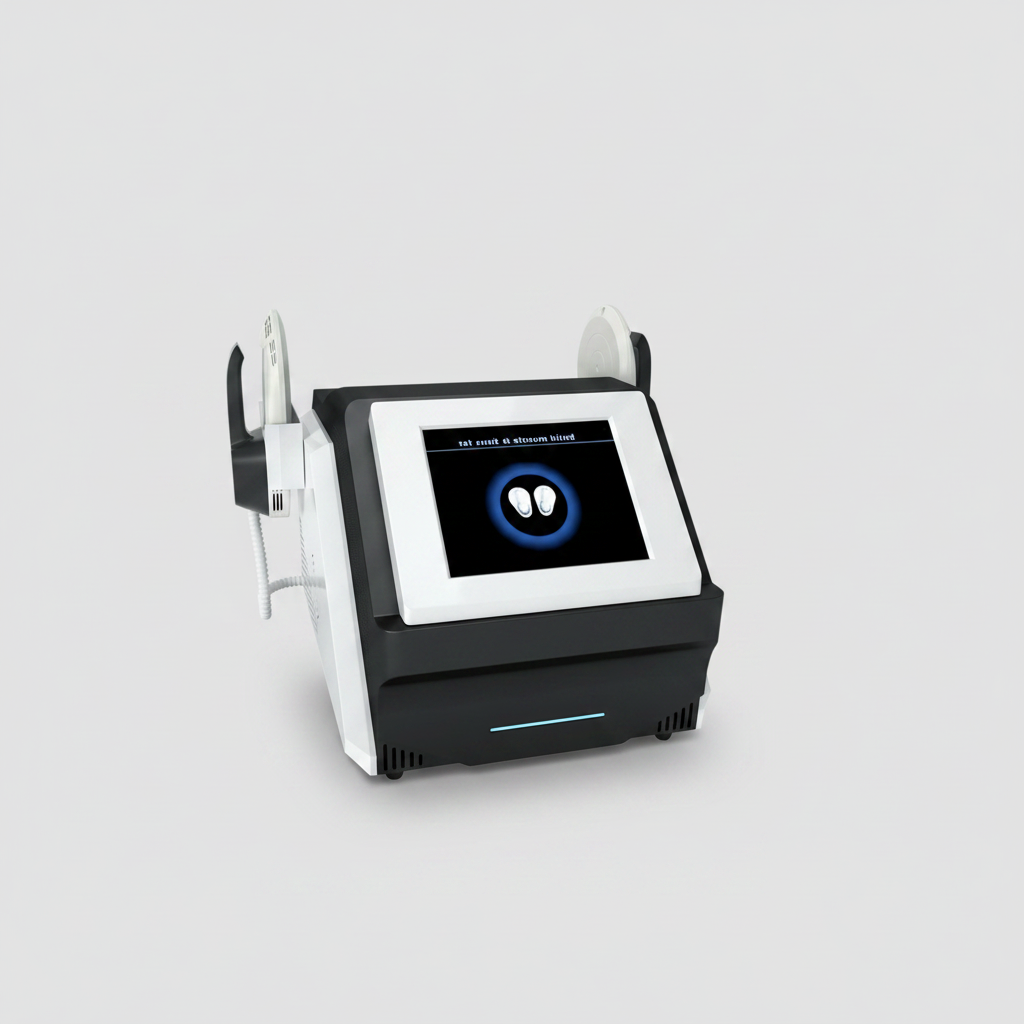
What are you buying when you choose a muscle stimulation machine?
A professional HIEMT machine includes more than a console. The complete package may contain treatment handles, positioning straps, cables, holders, operating materials, training, warranty coverage, and shipping support.
The quotation should identify:
- Exact machine model and selected variant
- HIEMT-only or HIEMT with RF
- Number and type of treatment handles
- Handle-control arrangement
- Voltage, frequency, plug type, and rated input power
- Included straps, cables, holders, and accessories
- Training format and operating materials
- Shipping terms and delivery responsibilities
- Applicable CE and ROHS documentation
- Technical support and spare-parts availability
- Three-year warranty coverage and exclusions
Do not assume that every feature shown on a product page is included with every variant. The final quotation should match the selected console, handles, voltage, and functions.
EMS and HIEMT are different technologies
Electrical muscle stimulation, usually called EMS, sends electrical pulses through electrodes attached to the skin. Pad placement, conductivity, pulse settings, and electrode condition affect the experience.
HIEMT uses electromagnetic applicators rather than adhesive electrodes. The applicators create a changing electromagnetic field that can stimulate motor nerves and produce repeated involuntary muscle contractions.
This distinction matters when comparing prices. A low-cost home belt is designed for personal use. A professional HIEMT machine must support trained operation, client screening, repeat appointments, equipment maintenance, and after-sales service.
The two categories should not be compared only by intensity settings or program counts because their specifications describe different energy-delivery methods.
What types of professional machines are available?
The main differences include handle quantity, control arrangement, RF capability, console design, and supported operating modes.
Two-handle machines
A two-handle machine may suit a clinic introducing a focused muscle-toning service, working with moderate appointment volume, or protecting startup cash flow.
It may require less room and offer a simpler workflow than a larger configuration. However, buyers should still confirm whether the handles can be adjusted independently and which treatment areas are supported in the manual.
The configurable EMSlim machine provides a starting point for comparing two-handle and other available configurations.
Four-handle machines
A four-handle machine can provide more positioning flexibility. Depending on the model, multiple handles may operate during the same appointment.
Four handles do not automatically mean four independent control channels or permission to treat two clients simultaneously. Some systems divide the handles into two paired groups. Each pair may share program or intensity settings.
The four-handle professional EMSlim machine is one configuration clinics can review when comparing higher-capacity options.
Vertical machines
A vertical console may use floor space efficiently and keep the interface accessible beside a treatment bed. The physical design can also affect cable routing, handle storage, cleaning access, and staff movement.
The four-handle vertical EMSlim machine shows one floor-standing format. Confirm the assembled and packaged dimensions before deciding whether it fits your room and delivery route.
HIEMT machines with RF
Some systems combine electromagnetic muscle stimulation with radio frequency. RF may be integrated into every handle or only selected handles, depending on the configuration.
Before paying for RF, ask:
- Which handles include RF?
- Can RF be switched off?
- Are HIEMT and RF controlled separately?
- Can both technologies operate simultaneously?
- Does the training cover both functions?
- Does the manual match the quoted configuration?
RF should support a defined service plan rather than function as an automatic upgrade.
What determines the machine price?
Handle count is one factor, but it is not the complete cost. Prices can also vary according to RF capability, control system, console design, voltage, accessories, shipping destination, training, and warranty support.
Wikbeauty currently lists the configurable EMSlim machine from $1,799 and the four-handle professional body-sculpting machine at $2,599. These are examples of listed prices, not guaranteed prices for every configuration. Check the selected variant and current product page before preparing a final budget.
Two prices are comparable only when they include equivalent items. A lower quotation may exclude additional handles, RF, delivery, duties, training, or accessories.
Use this formula when comparing suppliers:
Total landed cost = equipment + upgrades + freight + duties and taxes + payment fees + setup costs
The clinic should also budget for staff training time, room preparation, launch marketing, cleaning supplies, replacement accessories, and a maintenance reserve.
How many handles does your clinic need?
Start with the appointment plan rather than the maximum available configuration.
A two-handle system may be sufficient when the clinic expects focused appointments, has one provider, or is still testing demand. A four-handle system may be useful when greater positioning flexibility supports the intended treatment workflow.
Ask these questions:
- How many appointments do we realistically expect each week?
- Which areas will appear on the service menu?
- Can all handles operate at the same time?
- Are handles controlled individually or in groups?
- Does the room provide enough space for the console and applicators?
- Will staff use the additional capacity often enough to justify the cost?
Unused capacity increases the purchase price without creating revenue. A limited configuration can also restrict future services, so compare current demand with a realistic 12-month growth plan.
How does the machine affect room planning?
Commercial equipment needs room for the console, treatment bed, operator, applicators, straps, ventilation, and cable routing.
Measure:
- Console footprint
- Required ventilation clearance
- Space around both sides of the treatment bed
- Distance to a compatible electrical outlet
- Cable reach and safe routing
- Handle and strap storage
- Doorway, elevator, and stairway access
Use the packaged dimensions when reviewing delivery access. A machine may fit inside the treatment room but still be difficult to move through the building.
The operator should be able to reach the controls and reposition handles without stepping over cables or blocking ventilation.
What should a clinic expect from the equipment?
A professional machine is a tool for trained staff, not a guaranteed result in a box. Applicator placement, program selection, client suitability, intensity, and treatment consistency all affect the experience.
A repeatable workflow should cover:
- Consultation and contraindication screening
- Treatment-area and program selection
- Console, cable, handle, and strap inspection
- Correct client positioning
- Secure applicator placement
- Conservative intensity adjustment
- Session monitoring and documentation
- Cleaning, room reset, and follow-up
Product training does not automatically replace professional qualifications, insurance conditions, or local operating requirements. Clinics should verify who may operate the equipment in their market.
How should a clinic estimate ROI?
Do not calculate revenue using the machine’s maximum theoretical appointment capacity. Use expected completed sessions and collected revenue after discounts.
Monthly contribution = completed sessions × average collected revenue per session − monthly operating costs
Operating costs may include:
- Staff time
- Room occupancy
- Marketing
- Financing
- Payment-processing fees
- Cleaning supplies
- Replacement accessories
- Maintenance reserves
Prepare conservative, expected, and high-demand scenarios. If the purchase only works under a fully booked forecast, the configuration may be too expensive for the clinic’s current demand.
Can a muscle stimulation machine guarantee visible abs?
No machine can guarantee visible abs, a specific amount of muscle development, or weight loss for every client.
Abdominal appearance depends on factors such as existing muscle condition, body composition, activity, nutrition, and treatment consistency. Muscle stimulation and weight loss are not identical outcomes.
Clinics should avoid claims about effortless weight loss, permanent results, or guaranteed abdominal definition. The service should not be presented as a replacement for exercise, healthy habits, or medical care.
Conclusion
The right muscle stimulation machine is the configuration that matches the clinic’s planned services, appointment volume, room, staff capacity, and budget.
Compare the exact technology, handle controls, RF option, electrical requirements, accessories, training, shipping, documentation, support, and three-year warranty. Do not choose based only on the lowest starting price or highest intensity claim.
Clinics can review the complete Wikbeauty EMSlim machine collection and request a quotation for the model, handle configuration, voltage, and functions they need.
Frequently asked questions
Is a professional HIEMT machine the same as an EMS ab belt?
No. An EMS belt uses skin-contact electrodes. A professional HIEMT machine uses electromagnetic applicators.
Is a four-handle machine always better?
No. Four handles may provide more flexibility, but the value depends on control modes, room space, staffing, demand, and treatment plans.
Does the machine price include RF?
Not necessarily. RF may be available only with selected variants or handles. Confirm its inclusion in the quotation.
Why do professional machine prices vary?
Prices can differ because of handle count, RF capability, control design, accessories, training, delivery, warranty, and support.
What should the quotation include?
It should identify the model, voltage, plug, handles, controls, RF status, accessories, training, shipping terms, documentation, warranty, and total price.
Can the machine price predict client results?
No. Price describes the equipment package, not an individual outcome. Results and experiences vary.
Explore Device: emslim-machine-price-emslim-machine-for-sale


